


Hey everyone, Mayito here.
This one's a little different than my usual race recaps, because this year I wasn't just racing Hotter Than Hell — I was directing it. For the first time.
That's part of my role as cycling director for the MSU cycling team, and it meant my whole day looked different than it normally would on race day. But this post isn't really about directing. It's about what happened when I put the director's hat down for a couple of hours, pinned on a number, and raced the Masters field.
A Frantic Kind of Day
Friday started early and never really slowed down. I was up before the sun handling last-minute logistics, then out to the MPEC — the hub for the event — meeting with the officiating crew, the timing and results team, and everyone else who makes a race weekend actually happen. From that point on, my day was a constant loop: inside the venue, outside the venue, sweeping the course, putting out small fires, standing in the heat, solving whatever problem popped up next.
Before I left the house that morning, I packed my kit, socks, helmet, and shoes, and loaded my bike on the truck. I told myself I'd "loosely hang on to the idea" of racing. No commitment. Just an option, in case the day allowed for it.
By early afternoon, I was still going back and forth. Part of me thought, the day hasn't been that bad, I'll be fine, it'll be fun. The other part of me — the part that's coached long enough to know better — was saying something closer to the truth: this would be a foolish decision.
I raced anyway.
What My Heart Rate Was Trying to Tell Me
I got out for a few warm-up laps to see the course before the race — a figure-eight layout that turned out to be more open and fast than I expected. Wide turns, good speed carry, a genuinely fun course to race on.
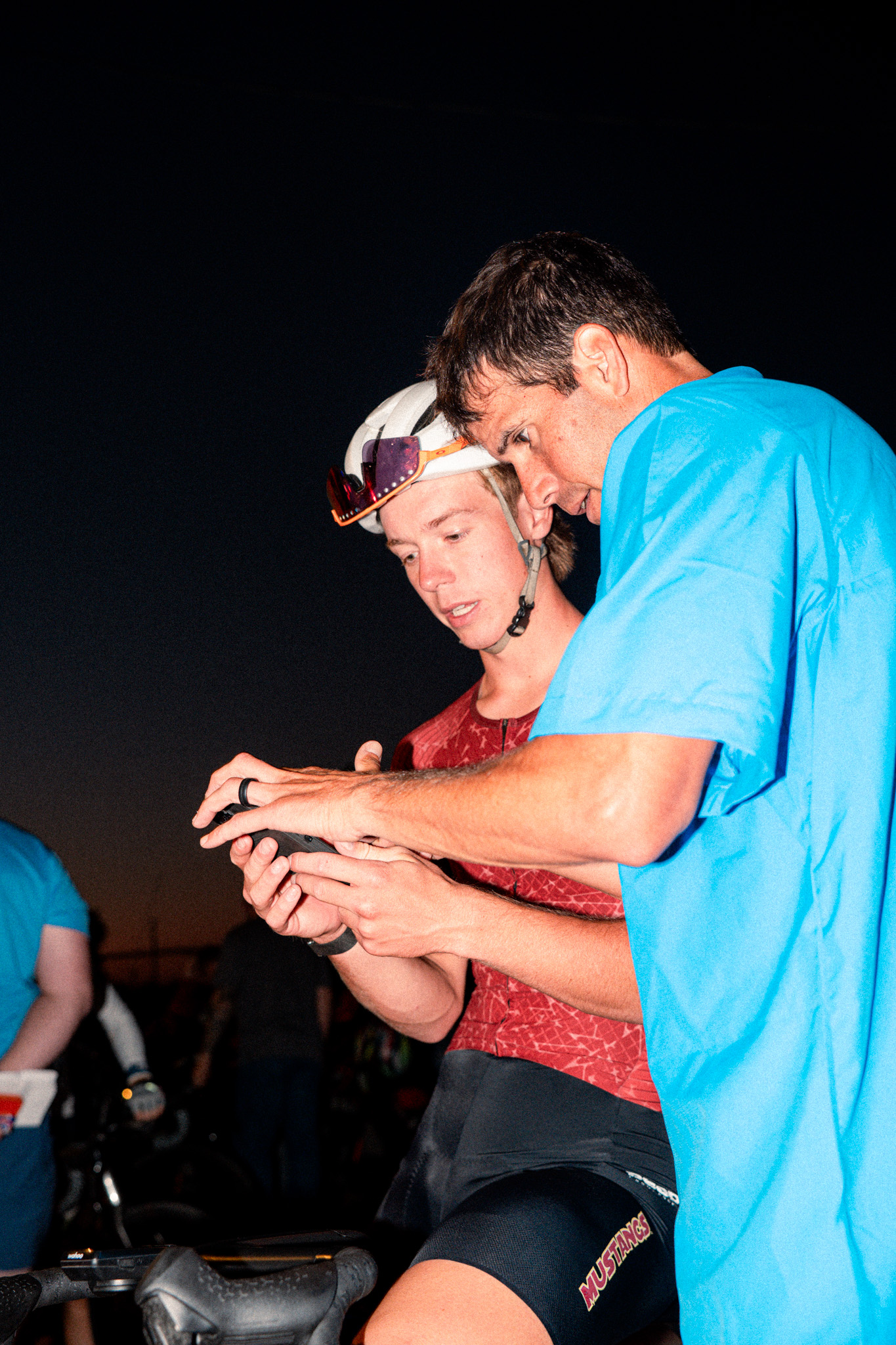
But during that easy warm-up, I noticed something I couldn't ignore. My head unit was still on from earlier, and at a completely casual pace, my heart rate was sitting in the mid-150s. For the effort I was putting into the pedals, that number had no business being that high.
That's not a small detail. That's data. And if one of my athletes showed me that same number under those same circumstances — two weeks of high stress, poor sleep, constant physical and mental load, standing in the heat all day — I'd tell them exactly what I was telling myself in that moment: your body is already under a heavy load before you've even started the race.
I raced anyway.
I want to be honest about that, because it matters. Knowing something and acting on it are two different things, and even coaches don't always choose the smart option. Sometimes the racer in you overrides the coach in you. That's human. But it's worth naming, because a lot of the athletes I work with go through the exact same internal negotiation before a hard effort — the part of them that knows better, and the part that wants to go anyway.
How the Race Actually Played Out
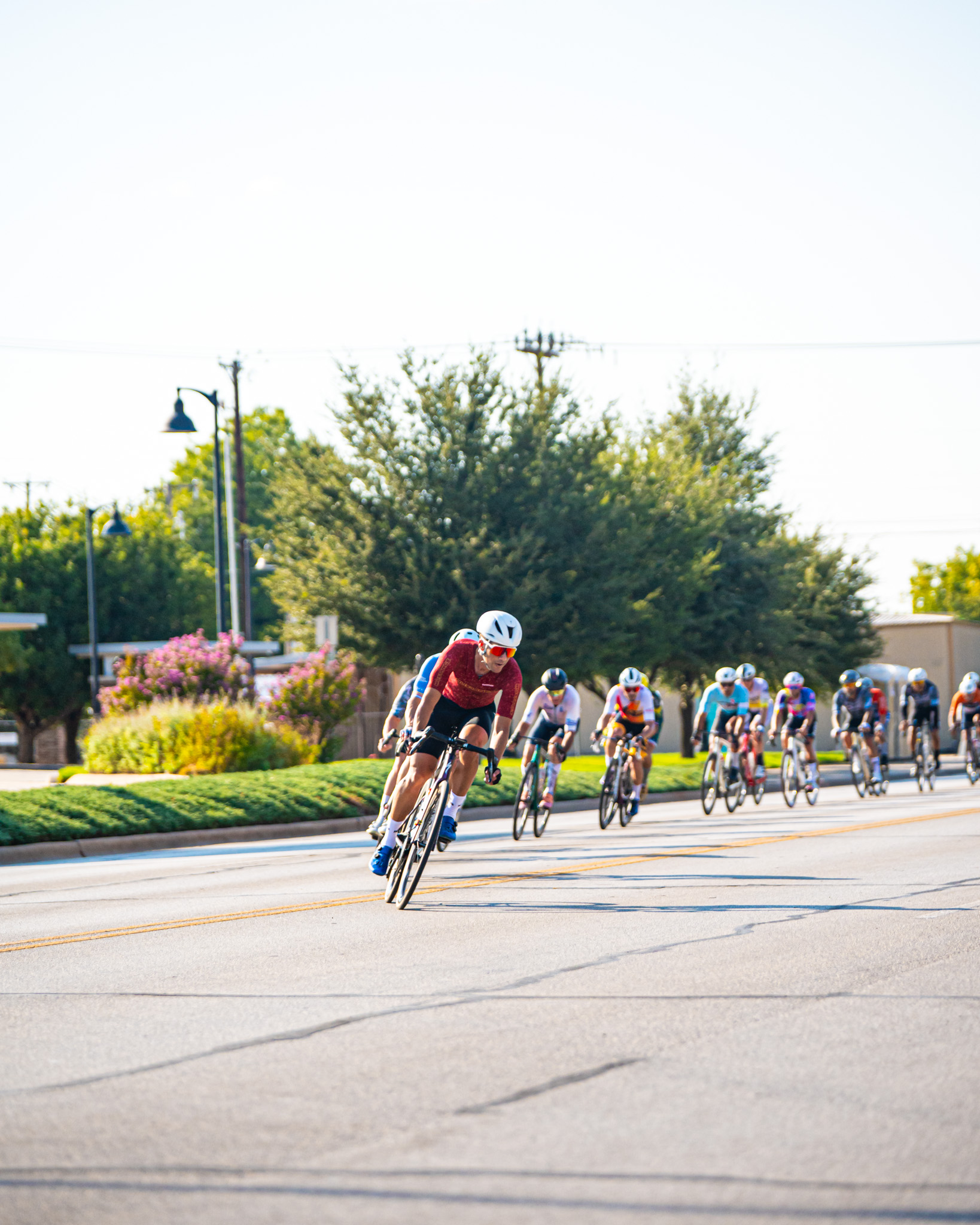
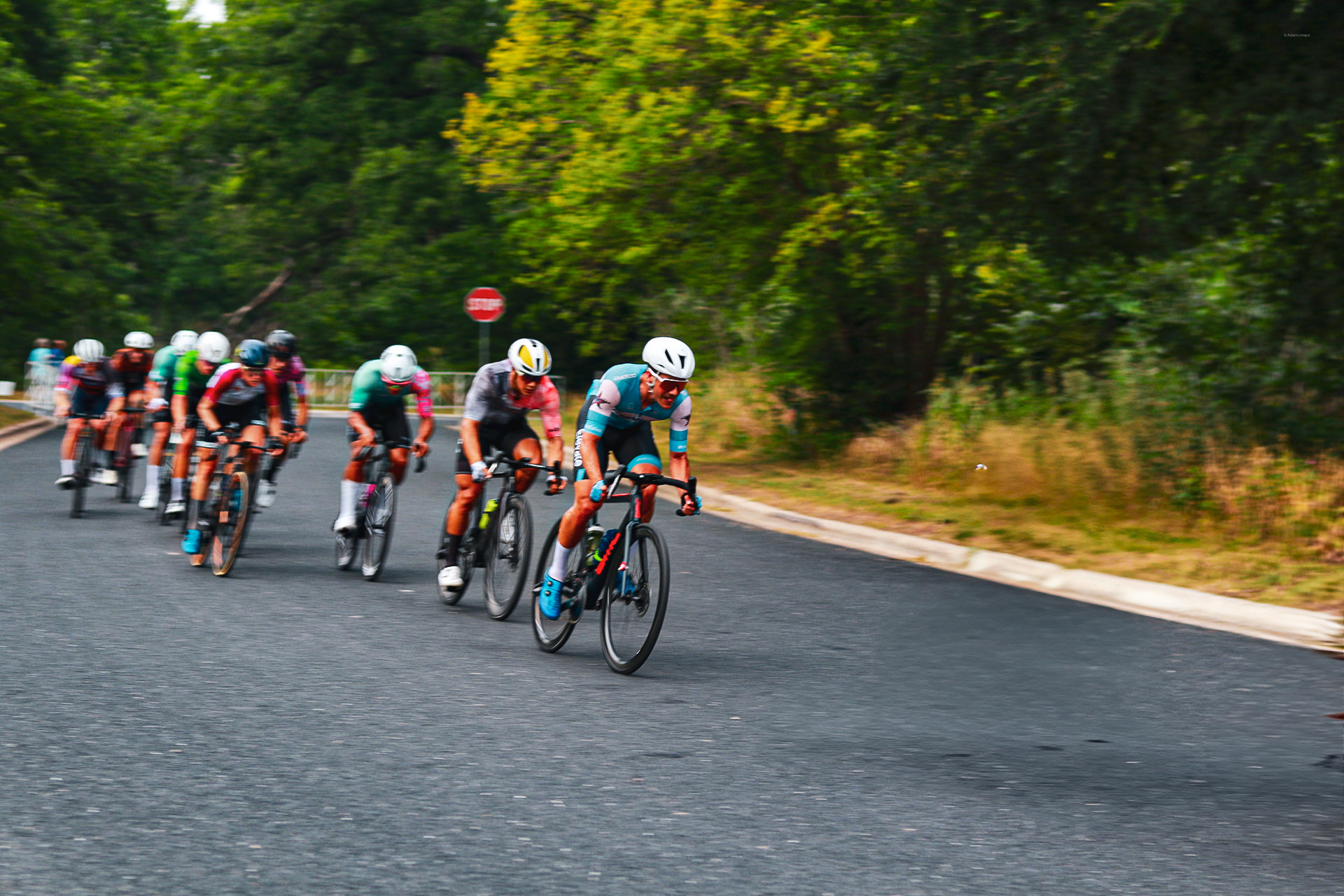
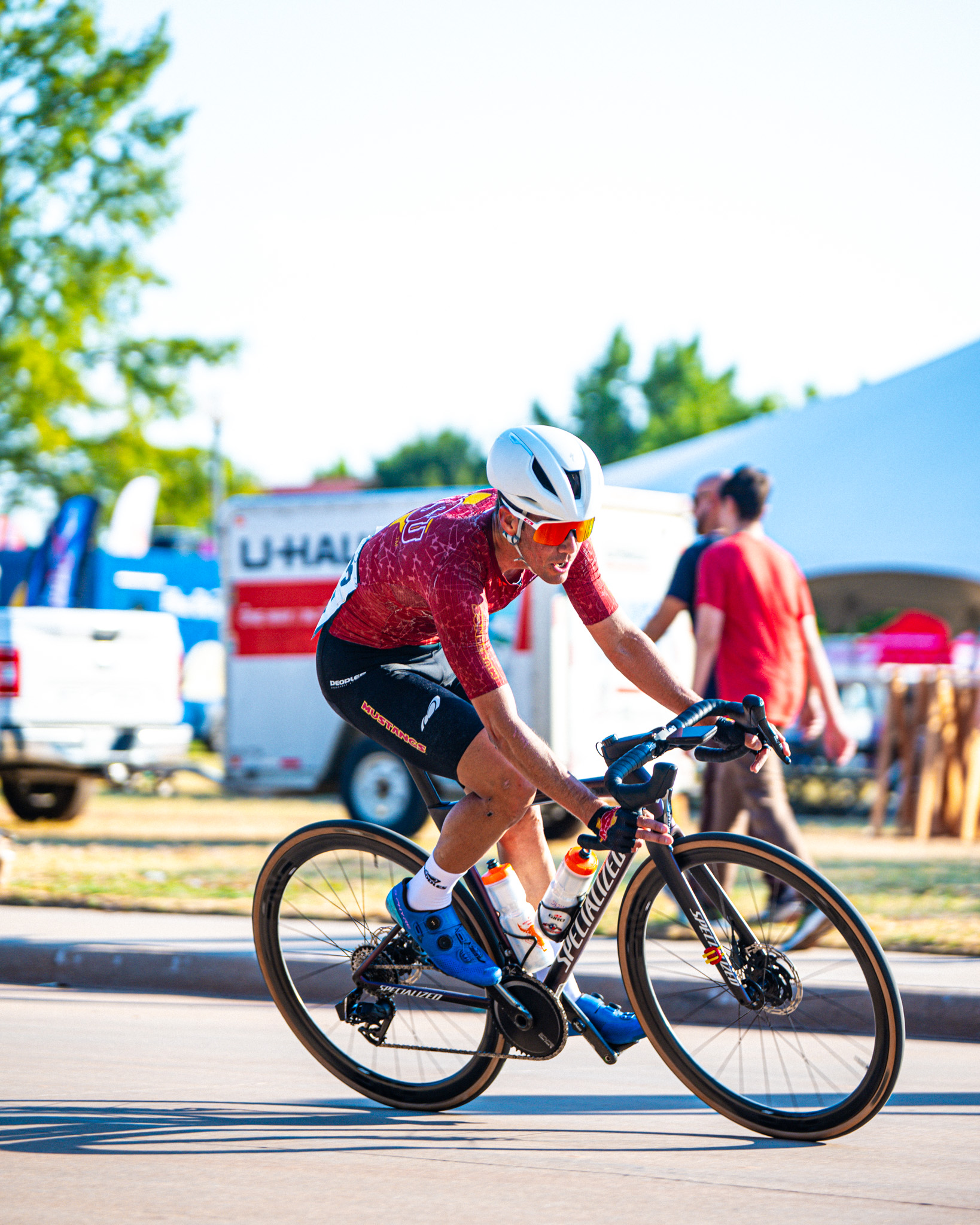
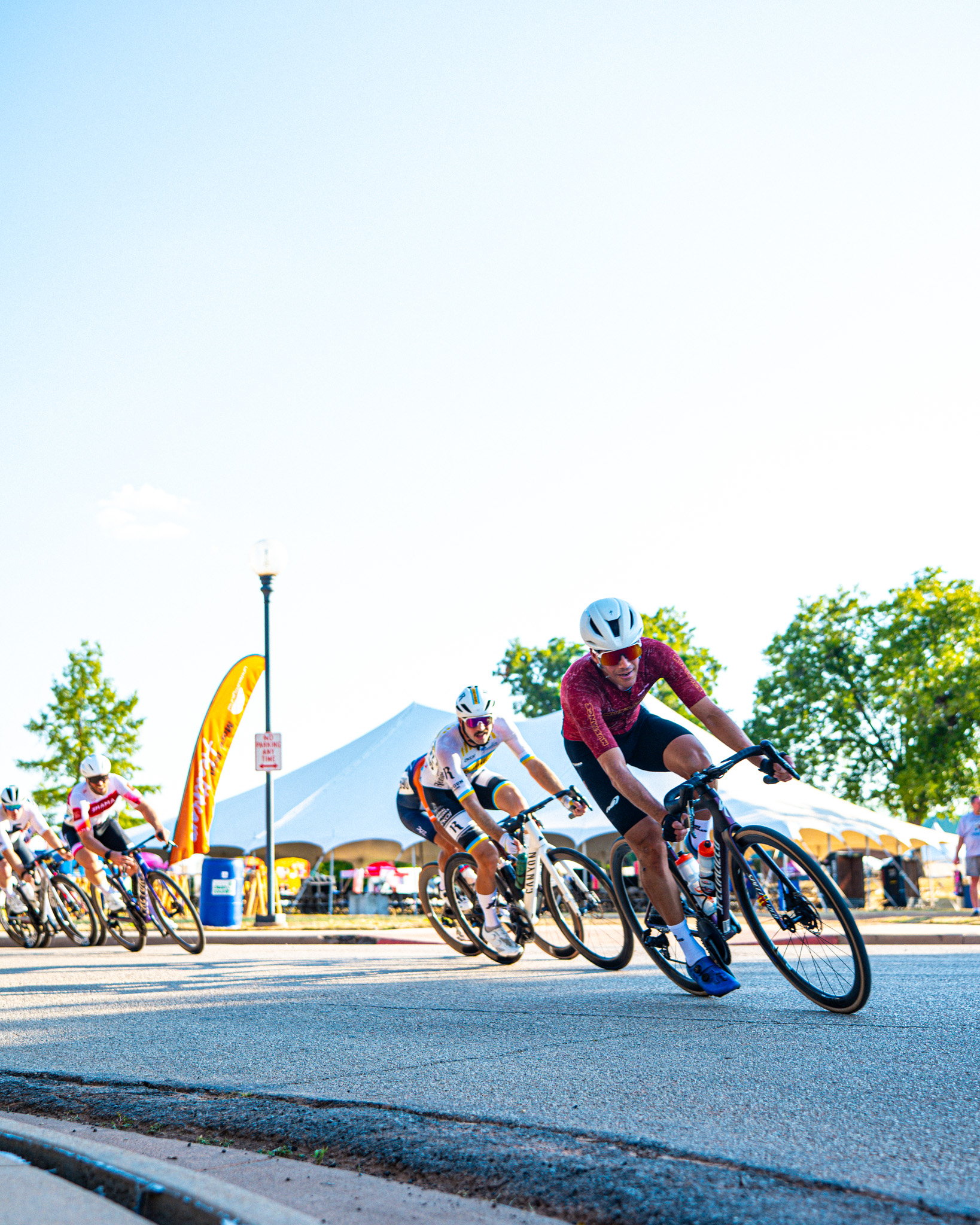
I lined up in the Masters field, smaller and a bit more measured than the pro fields racing later that evening. Early on, I stayed conservative — genuinely trying to just watch the race unfold instead of doing the work. I know how these fields read a rider. If you're strong on paper and you're the one bringing back every move, you get marked fast. So I kept some cards close for a while.
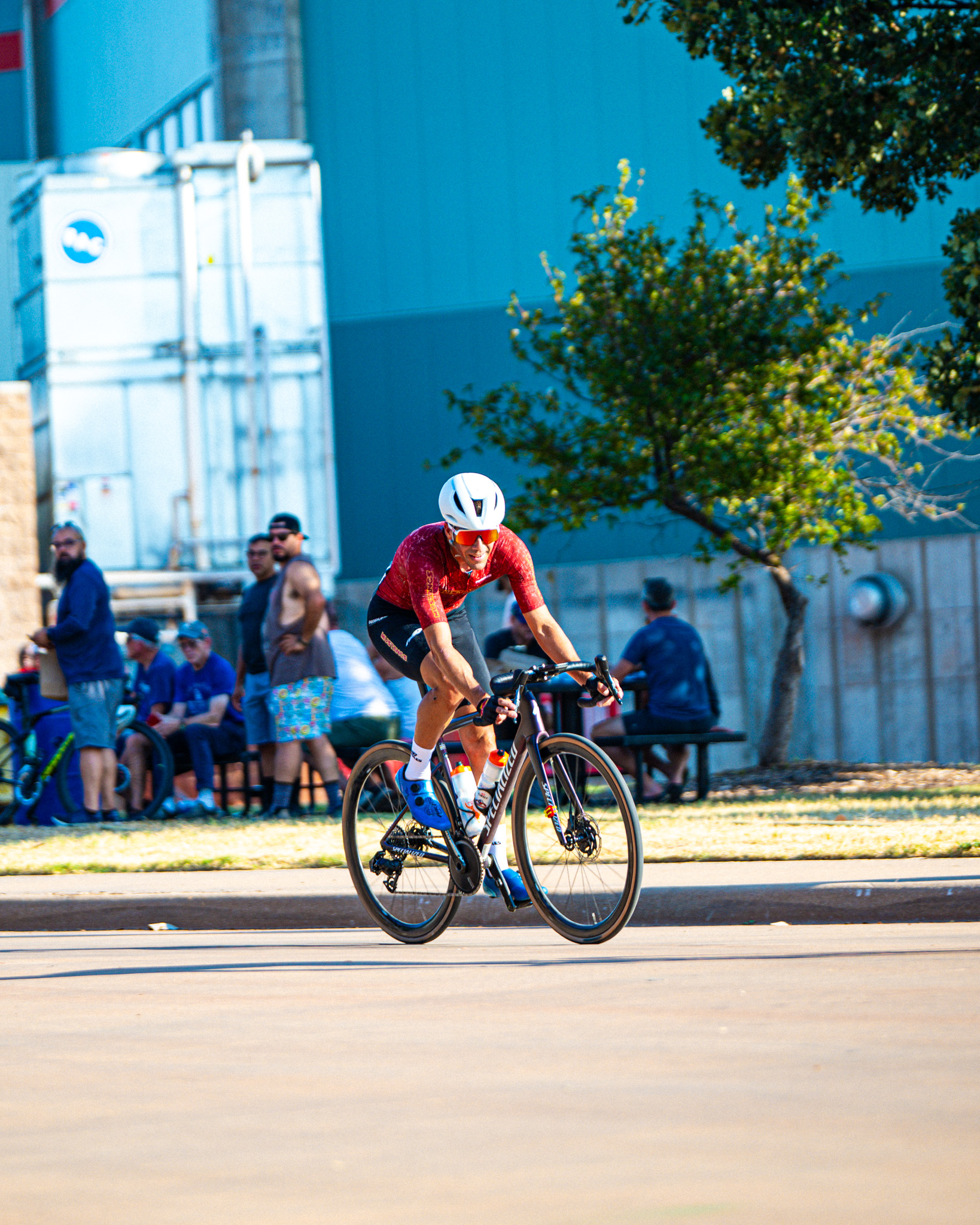
Eventually, though, the racer in me took over. I started showing up near the front, throwing in a few attacks, getting a gap here and there. I even took a prime — my family enjoyed some Raising Cane's that night courtesy of the gift card I won, so at least there was a tangible reward for the effort.
Once I started animating the race, I became one of the riders the field looked to when someone else attacked. That's a role I don't mind filling, and I had some help — another strong rider was doing similar work to keep a two-man team in check as they traded attacks and counters off the front.
For a while, I felt okay. Then I didn't.
You could feel exactly where the accumulated fatigue caught up to me. I lost that extra gear right when the race needed it most — right as the lap cards started coming out and the moves got serious. One rider, a strong time trialist from the team I mentioned, launched a real counter-attack. In a fresher state, that's a move I go with. That day, I looked at it and thought, I chase that down, I get countered again, and then I still have two more races to direct. I let it go.
The race split. Two riders went clear. I rolled in with the rest of the field, out of matches to play.

No Regrets, Just an Honest Assessment
Here's the truth: I had a great time. I wanted to race that course, feel what the field was feeling, and understand the experience from the inside instead of just the sidelines. I got exactly that.
Could I have rested more and saved something for the race? Sure. But that was never realistic given the day. My first responsibility was directing a well-run event for the athletes who paid their entry fees and lined up to race. That job came first, and I knew that walking into the morning.
Am I a little frustrated I didn't have more in the tank when it mattered? A little. But not much. This wasn't about a result. It was about showing up, testing myself honestly, and learning something in the process — which, if I'm being consistent with what I tell my athletes, is usually the actual point.
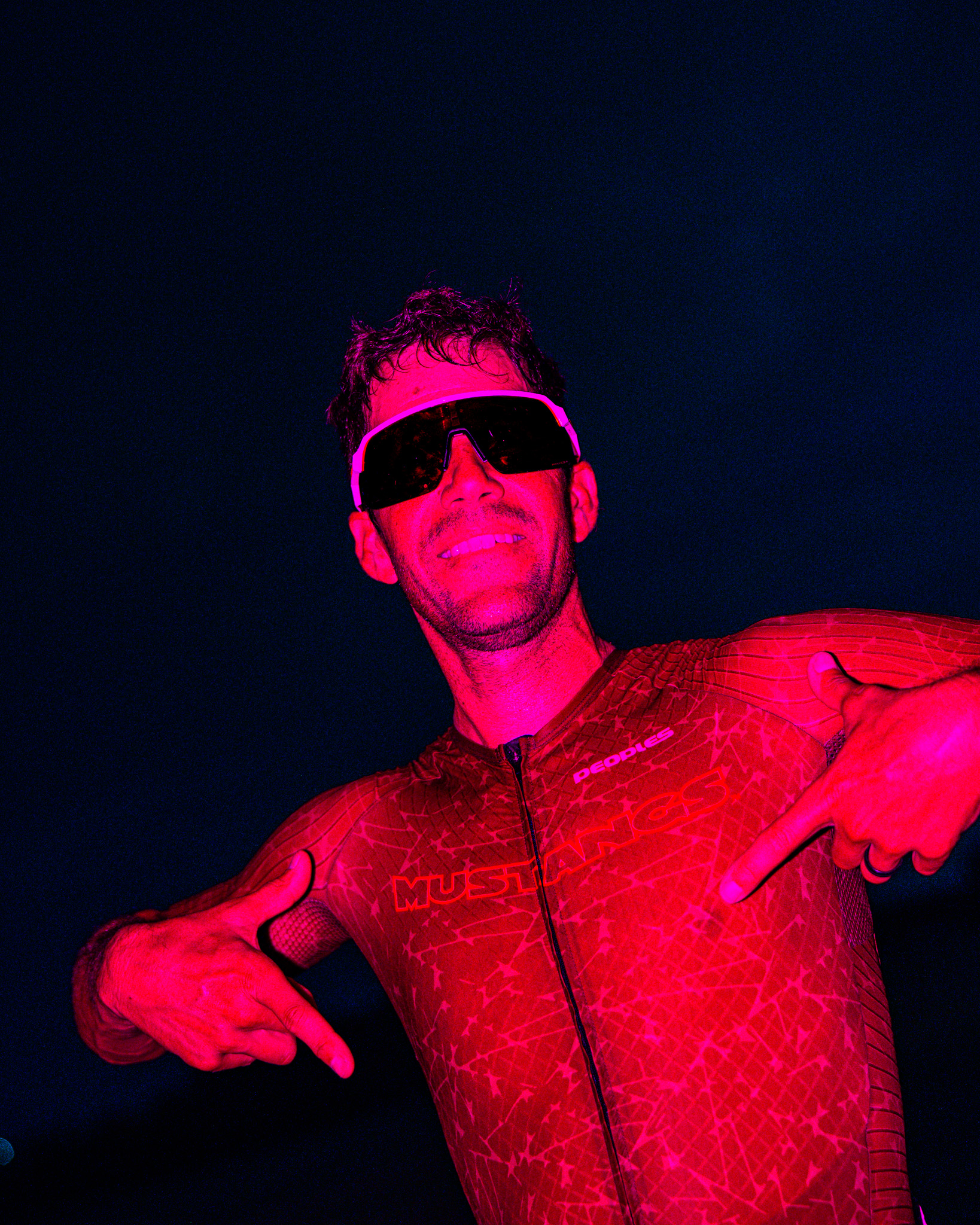
After the finish, I peeled off the kit, traded it for my orange cowboy hat and Hotter Than Hell shirt, and went right back to directing — and got to watch two genuinely great races unfold afterward. Good competitors, good sportsmanship, good environment all around.
The Takeaway
If there's a coaching lesson buried in this one, it's this: your body will tell you the truth before your mind is ready to hear it. A heart rate 20+ beats higher than it should be at an easy pace isn't random. It's information. Most of the time, listening to that information is exactly what I'd coach any of you to do.
This time, I raced anyway — and I don't regret it. But I also didn't pretend the number wasn't there. That's the difference between ignoring your body and making an informed decision with your eyes open. One of those builds long-term consistency. The other one, done too often, is how riders end up overtrained, burned out, or hurt.
That's the recap. Directing my first Hotter Than Hell, racing the Masters field on tired legs, and coming away with a full day and a full heart.
-Mayito, out.