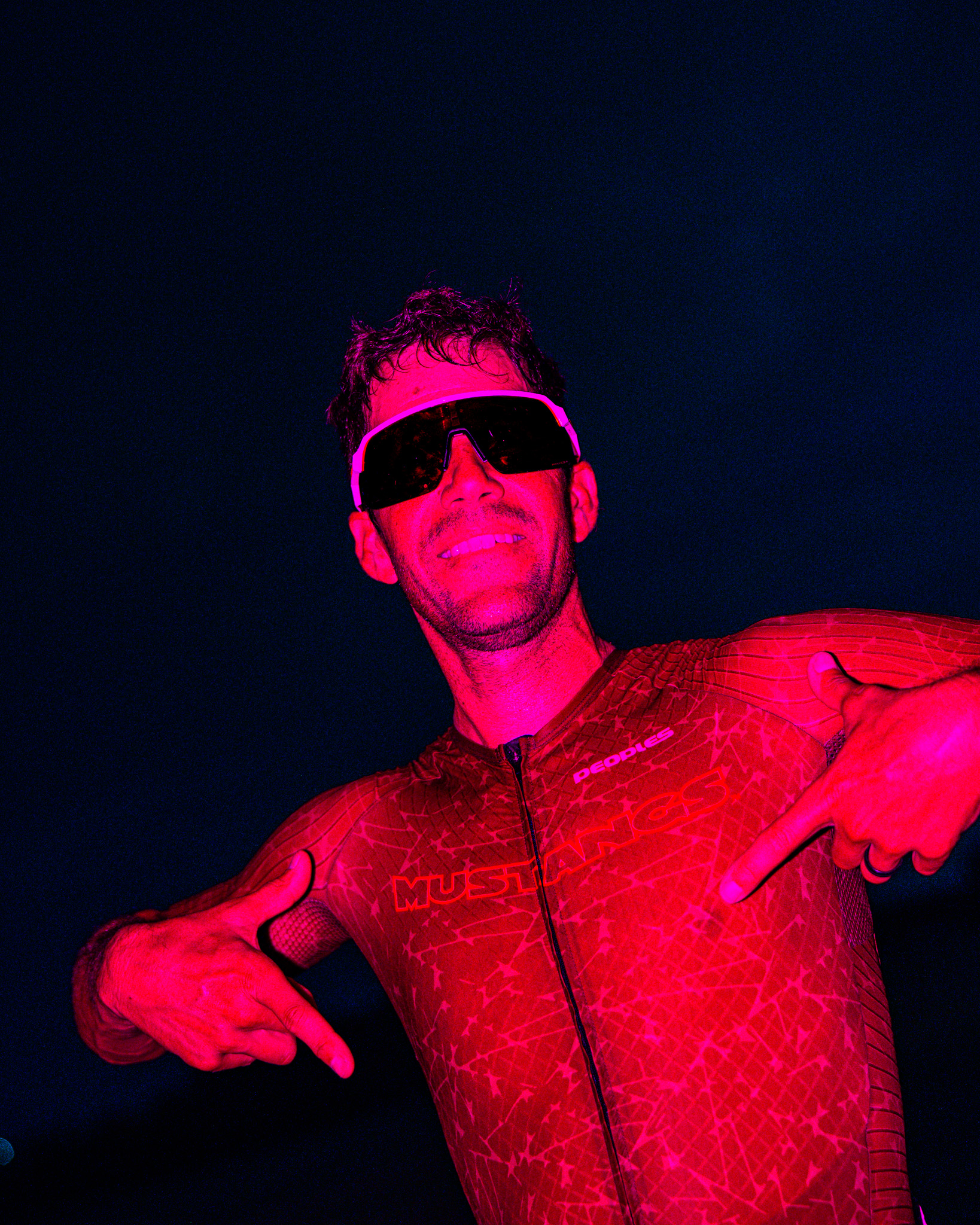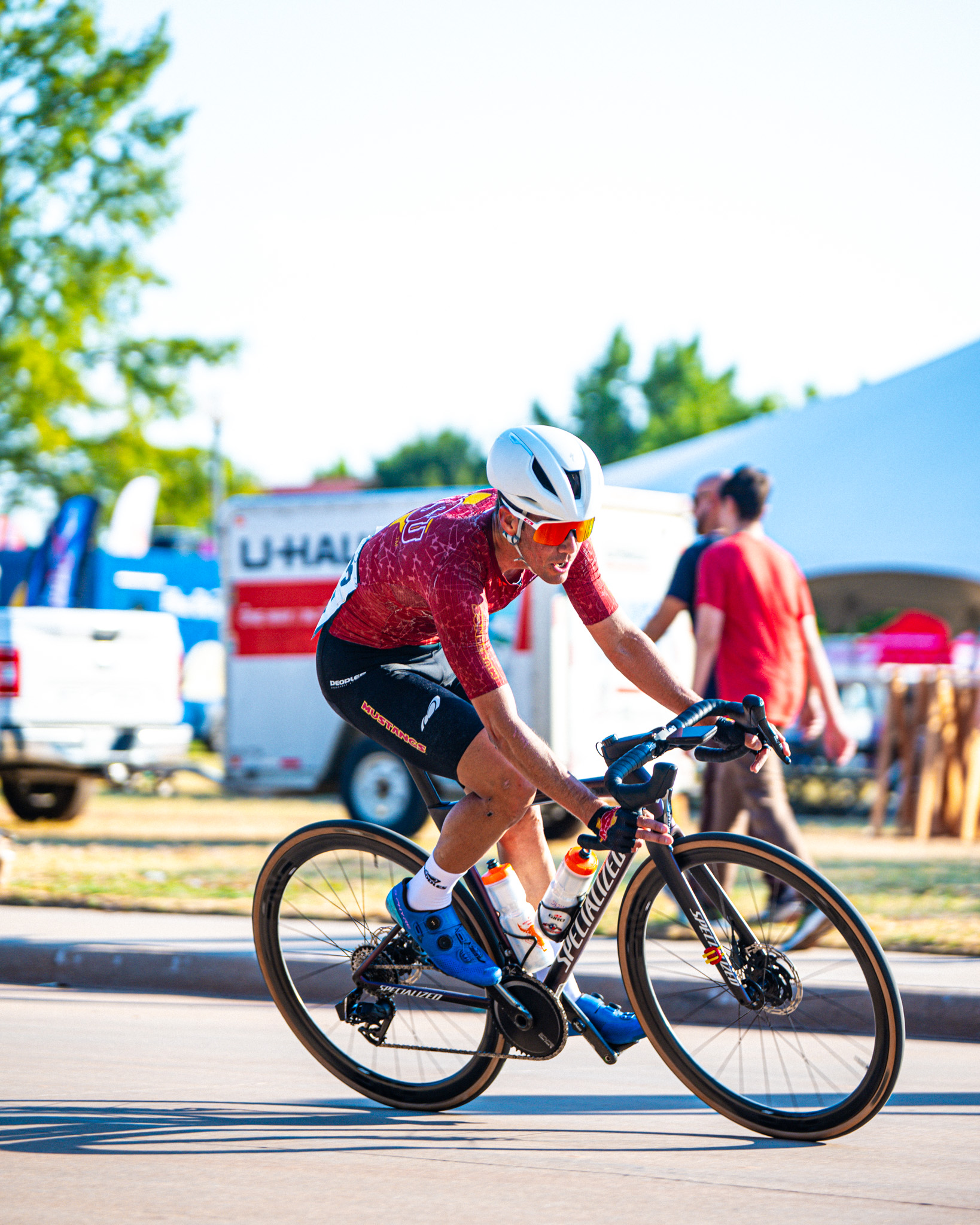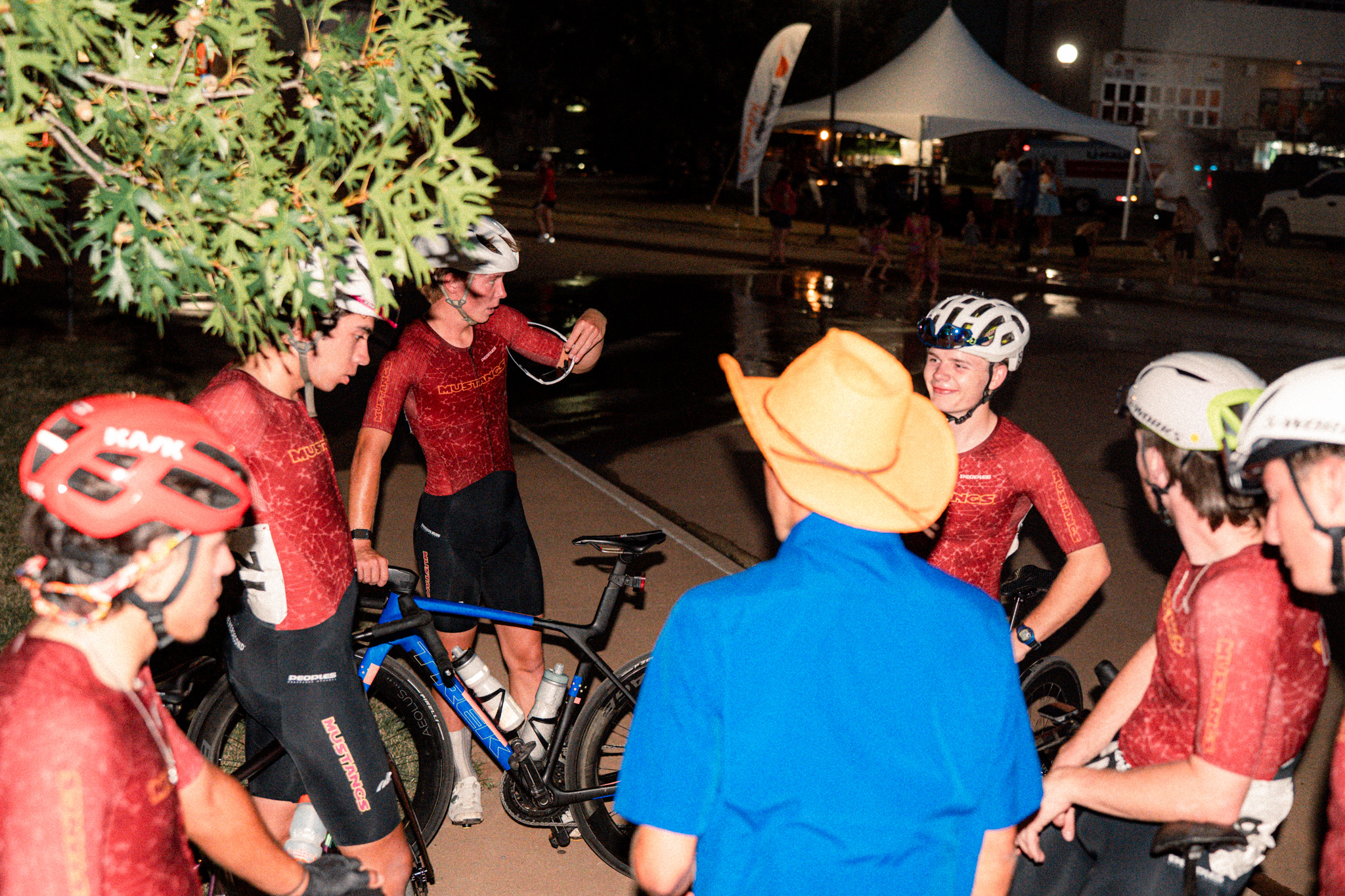

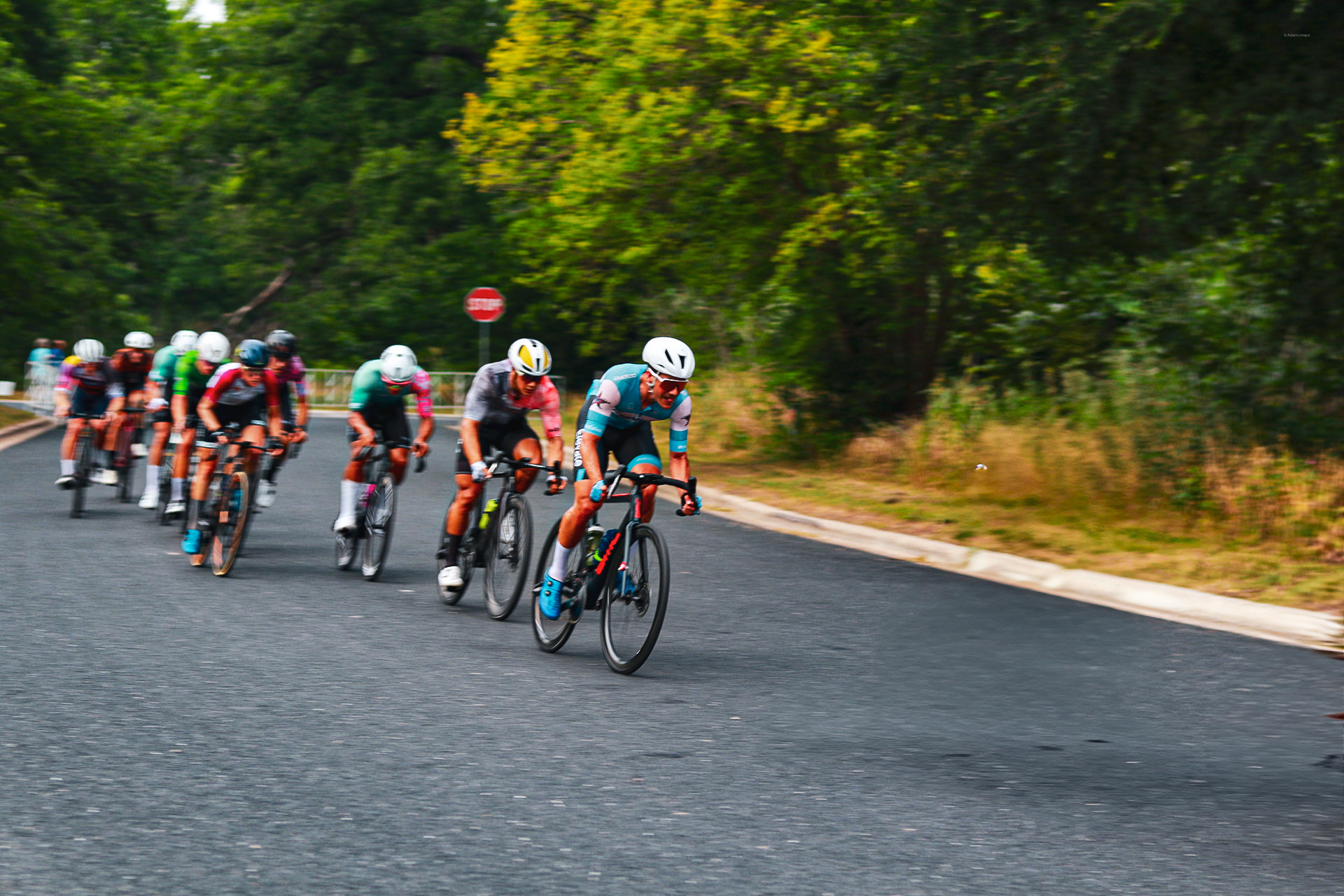

If you read my last post about Maverick City, you know I was in a pretty dark place mentally after that weekend. Racing in the Pro 1/2 field left me entirely on the back foot. The speeds were massive, the depth was relentless, and it magnified a glaring weakness of mine: bike handling inside a high-speed pack.
Coming into Tulsa Tough—an event known for its legendary crowds and even higher stakes—I had to make a business decision.
If I lined up for the Cat 1/2 races, the field was going to be another half-step faster than Maverick. I’d be buried in the red zone just trying to survive, with zero mental bandwidth left to actually work on the mechanics of my riding.
So, I made the smart call: I dropped into the Masters field.
Make no mistake, Tulsa draws a national-caliber Masters field; the racing was still brutally hard. But it lacked the top-to-bottom suffocating depth of the Pro 1/2s, giving me the exact opportunity I needed to dig my heels in and aggressively press into my handling weaknesses.
Here is how three days of absolute chaos at Tulsa Tough unfolded.
Friday Night: Blue Dome Reset
On paper, Friday night at the Blue Dome Criterium was the only race guaranteed to be dry. It was fast, featured tight corners, and the energy from the crowd was electric.
Traditionally, I’ve always raced Blue Dome well. Even four years ago in the Pro field, I loved the flow of the course. Friday night didn't disappoint. I got off to a clean start, trusted my lines, and stayed positioned exactly where I needed to be. One rider managed to slip away for a solo win despite full teams trying to chase him back, but for me, the race was a massive success.
It was the ultimate rebound. Maverick City was firmly in the rearview mirror, my confidence was returning, and I had successfully executed a mental reset.
Then came Saturday.


Saturday: Facing the Rain and the Windshield Excuses
I sat in my Airbnb on Saturday morning watching the radar. The forecast called for heavy rain, and it wasn't bluffing.
If you know the Saturday Tulsa course, it features a lightning-fast left-hand turn at the bottom of a rapid descent. Doing that at high speed is intimidating enough; doing it on wet asphalt changes the calculus entirely.
My brain immediately went into defensive mode, cooking up highly rational excuses to back out:
"You’re getting ready to move your family to Wichita Falls. You need to stay healthy. Is a rain crit really worth the risk?"
But here is where the mindset shift happens. The exact reason I didn't want to line up was the exact reason I had to.
[The Friction Point]
The Comfort Zone ──► Avoid the wet crit to stay safe.
The Growth Zone   ──► Use the wet crit to conquer the cornering weakness.
If my goal was to become a better bike handler, I couldn't skip the ultimate classroom. I lined up.
At first, it was an absolute struggle. I was pinned near the back of the field, getting gapped out of every single turn, fighting my own hesitation. But lap by lap, something clicked. I started finding the lines. I started trusting my tires, my equipment, and the riders around me. I found a groove and was actively moving up the field—and then, the red flags came out.
Lightning in the area stopped the race for 30 minutes. It was incredibly frustrating because physically, I felt like one of the strongest riders out there; I wasn't in over my head at all.
When they finally restarted us, the heavens didn't just leak—they opened completely. It was a torrential downpour with standing water pooling in the corners. This time, the survival instinct won. I panicked, let a gap open that I couldn't close, and pulled the pin to live another day.
Even with the DNF, I left Saturday satisfied. I faced the fear, found the rhythm in the wet, and proved my fitness was exactly where it needed to be.
Sunday: Crybaby Hill and the Inches That Cost the Breakaway
Sunday is the big one. Crybaby Hill.
The rain held off, but the course presented a different technical demon: a blindingly fast, slightly off-camber right-hand turn at the bottom of the hill.
This brings me to a piece of coaching advice I have to give myself just as much as I give to the athletes sitting across from my desk: Look through the turn.
When you look deeply through a fast corner, your brain registers that there is more exit room than you think there is. That visual cue allows you to let off the brakes, choose an aggressive line, and carry maximum momentum. I didn't do that. I anticipated running out of room, hesitated, and scrubbed too much speed every single lap.
That hesitation cost me the race.
A dangerous breakaway established itself up the road. My fitness was incredible—fueling up Crybaby Hill felt relatively easy when I was sitting in the pack—and I launched an aggressive counter-attack to bridge across. A few of us got within three to four seconds of making contact with the winning move.
But because I wasn't railing that bottom off-camber turn, I couldn't close those final four seconds. I never made contact, and the break stayed away to contest the win.
The Big Picture: Momentum is Built in Steps
It’s easy to get frustrated about missing a winning breakaway by four seconds. But looking at the trajectory from Maverick City to Tulsa Tough, the progress is undeniable.
I don’t get to race a massive block of criteriums every year. I only get a few opportunities to pin on a number, which means I have to treat every single race as an accelerated laboratory for self-improvement.
Tulsa was an incredible step forward. The fitness is dialed, the mental resilience is there, and the specific areas requiring work—visualizing corner exits and carrying speed—are explicitly clear.
The crit block is on hold for now, but the lessons are locked in. Time to take this momentum back to the training roads.